Got an Offer on a Georgia Apartment? The 7 Checks Before You Transfer a Shekel
An interview with Shay Yakov, CEO of RealFix Finance
Send us the offer you received — we will tell you straight whether it would have survived our process. A first strategic read, 20 minutes, and after that you will know exactly where you stand.
$103,000 for an apartment, plus another ₪30,000 in "brokerage and legal fees." A tower in Batumi with an "8% annual rental program." 30% down and 24 installments. A furnished apartment, ready to hand over, at $55,000. These are not hypotheticals — they are the offers that landed on our desk in recent weeks, each one in the hand of a different Israeli asking the same question: "Is this good, or am I about to get burned?"
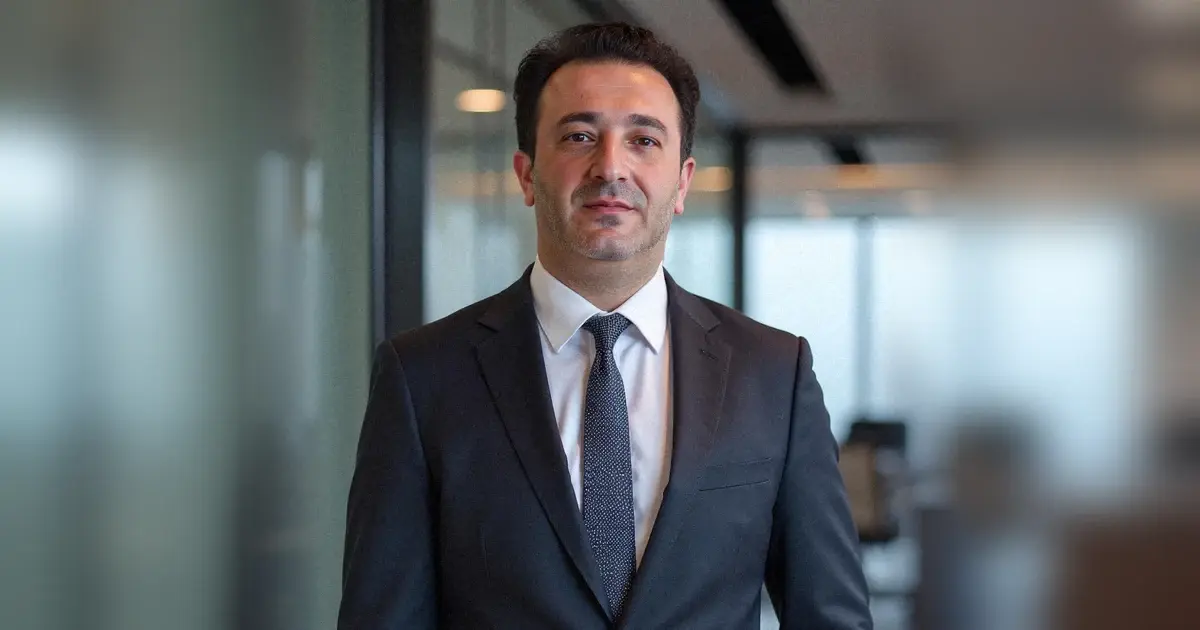
We asked Shay Yakov, CEO of RealFix Finance — 27 years in financing and credit, and for the last decade and a half also in international real estate, from Amsterdam and Prague to Tbilisi — to walk us through an offer the way it actually walks across his desk.
01.Why do most of the offers that reach you get rejected?
Question: You say in your marketing that a significant share of the projects that reach you get rejected. Isn't that overstated?
Shay Yakov: No — and that's the point. Anyone who sends us a project doesn't need us to say "nice." They need us to tell them the truth. A project goes through three checks with us before anyone talks about price: an economic check — whether the developer's numbers stand up against the real market in that area, not against their pitch deck; a financing check — whether a Georgian bank is willing to mortgage this asset, because a bank that won't finance is telling you something the developer won't; and an engineering check — our own architect, our own engineer, and a full background on the company's owners. Even the quality of the tile adhesive doesn't get past us. After those three checks, few remain. Not because Georgia is the problem — because what gets marketed to Israelis is not always what is worth buying.
02."Guaranteed 8%" — why that is the first red flag
Question: A lot of offers arrive with a "rental program" — the developer committing to a fixed yield for several years. Isn't that security?
Shay Yakov: That is the first red flag I look for. A "guaranteed" yield from a developer is not a yield — it is a loan you are giving the developer, which he then pays you back out of your own money, money you already overpaid him in the purchase price. Run the math backwards: if the developer can guarantee 8%, why does he need your capital? Because the "guarantee" is baked into the price. In Georgia, on the right asset in the right location, annual yield sits in the 8%–12% range — as potential, not as a promise. Whoever puts that number on paper has usually already taken it from you up front.
03.₪30,000 in brokerage fees on a $100,000 apartment
Question: An offer we saw: $103,000 for the apartment, plus another ₪30,000 in brokerage and legal fees. Reasonable?
Shay Yakov: Ask the question differently: who is paying whom, and who is working for whom. An Israeli broker selling a Georgia project takes a commission from the developer — and now from you as well. He will sell the apartment the developer needs to move, not the apartment you need to buy. With us, the money never passes through our hands: the client pays the developer directly, and we take a professional fee from one person — him. That is what lets us sit on his side of the table, facing the developer, not beside him. And why is our price different? A developer selling to a one-off buyer pays five percent and more to a sales agent. We bring him repeat buyers in volume, and he would rather put that spread into the price. The spread changes from project to project — we have seen ten percent and we have seen a lot more — which is why we do not promise a price. We bring volume.
04."Furnished and ready to hand over at $55,000" — what the price is telling you
Question: And the genuinely cheap ones? $55,000, furnished, ready, cash.
Shay Yakov: Price always tells a story. The question is whether you know how to read it. A "furnished and ready" apartment priced well below the street is usually one of three things: a floor or an aspect nobody wanted, a building whose management has already collapsed, or a seller who needs out fast — and that last one can actually be good, if you check why. So our first check is not "how much does it cost," it is "how much does the apartment next door cost." Anyone who buys without knowing what the unit next door is worth sits across from the developer alone — in his language, on his contract, at his price.
05.₪300,000: one apartment, or a whole portfolio?
Question: Say someone has ₪300,000. What is better — one apartment in Israel, or something in Georgia?
Shay Yakov: With ₪300,000 in Israel you do not buy an apartment, and if you do — you get a 2%–3% yield and 8% purchase tax. In Tbilisi, ₪300,000 is not one apartment. It is equity for a portfolio: local bank financing of up to 70%, a developer payment plan, and the same amount stretched across three or four units. Zero purchase tax today — under current law, not as a promise forever. Your money is not buying an apartment. It is building a book. And if you do not have the ₪300,000 sitting in cash? You already have it in the walls of the apartment you own, or in a hishtalmut fund. You do not need new money. You need to know what you already have.
06.Already bought in Batumi and want out? That is a portfolio too
Question: People also come to you who already bought — in Batumi, for example — and now ask how to get out.
Shay Yakov: Yes — and that may be the clearest signal of what is wrong with this market: people bought without anyone planning their exit. An exit is not "we'll sell when it goes up." An exit is part of the structure from day one — who the next buyer is, at which stage of the project, and what happens to the tax. In Georgia, capital gains tax is 0% after a two-year hold, and that figure changes the entire plan — if you know it in advance. If you are already in, bring the contract. Even a file that was opened the wrong way can still be closed the right way.
07.So what do you do with the offer you just received?
Question: To close — a person is holding an offer in his hand. What does he do tomorrow morning?
Shay Yakov: Don't sign. Send it. The offer as it is — pitch deck, price list, draft contract — and we will tell you straight whether it would have survived our process. No commitment on his side, no surprises on ours: if it is good, we will say it is good, even if he does not buy through us. And if it is not — we just saved him the most expensive lesson there is. The rest, if he wants it, we handle: sourcing, a payment structure with the developer, local bank financing, legal review, title in his name, management and exit. The client has to say one thing: yes — and how many apartments he wants to see in his name, and by when.
The advice you get for free is always the most expensive.
Send us the offer you received
Send us the offer you received — we will tell you straight whether it would have survived our process. A first strategic read, 20 minutes, and after that you will know exactly where you stand.
072-2202044 | WhatsApp: +972549075979 | realfix.co.il/en/book/georgia-strategy
RealFix Finance charges professional fees exclusively from its clients — zero conflict of interest. Yields mentioned in this article are historical potential — not a guarantee of future results. Georgia's 0% purchase tax is accurate under current law.


